+91 6358172453

 info@saumitgroup.com

Recovering valuable metals from ores, industrial process solutions, and recycled batteries requires effective separation techniques…
Frequently Asked Questions
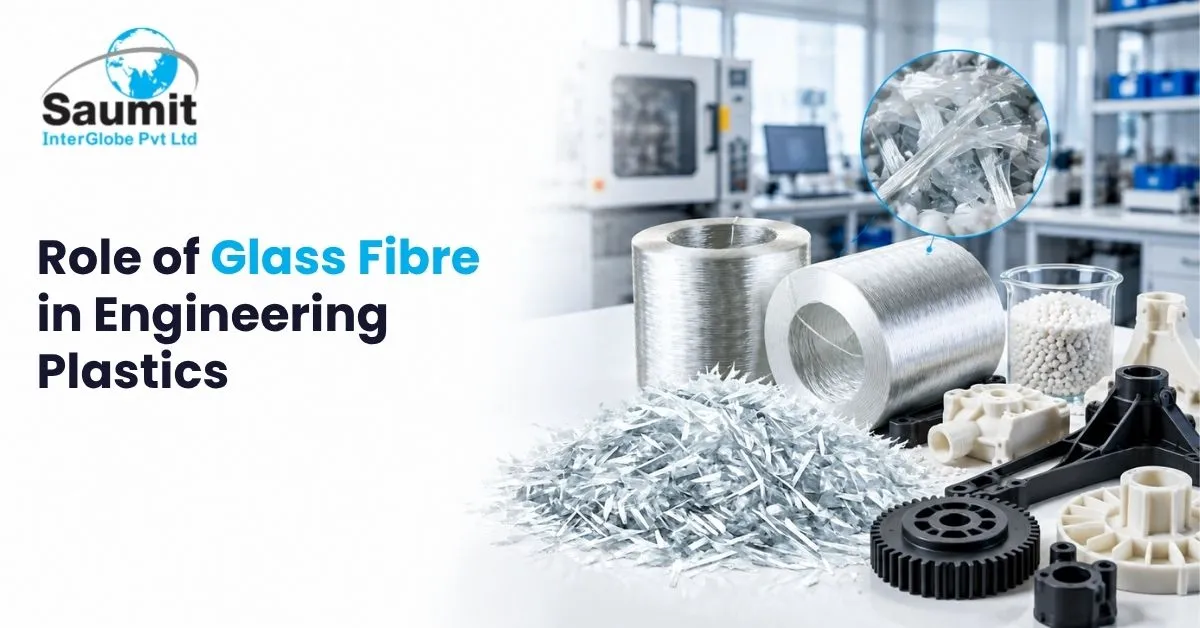
Glass fibre reinforces the polymer matrix to improve strength, stiffness, and dimensional stability. It helps engineering plastics meet mechanical requirements that unreinforced polymers may not satisfy.
Common options include polyamide (PA6 and PA66), PBT, polycarbonate, and selected polypropylene grades. Compatibility depends on the resin formulation, fibre sizing, and intended application.
Glass fibre can improve stiffness retention and resistance to heat-related deformation. However, the maximum service temperature depends on the base polymer, formulation, and operating conditions.
Important factors include resin compatibility, fibre content, fibre length, fibre orientation, processing conditions, and the component’s operating environment.
Potential limitations include increased material density, reduced ductility, abrasive wear on processing equipment, and direction-dependent mechanical properties. The effects vary with the material formulation and application.
Conclusion
Glass fibre reinforcement helps engineering plastics achieve greater strength, stiffness, and dimensional stability for demanding applications. Glass Fibre supports the production of durable components across automotive, electrical, industrial, and consumer product sectors. Selecting the right resin, fibre content, and processing method is essential to achieving the required performance. Careful material evaluation and testing help manufacturers balance durability, processability, and cost while choosing a suitable reinforcement solution.
Related Posts