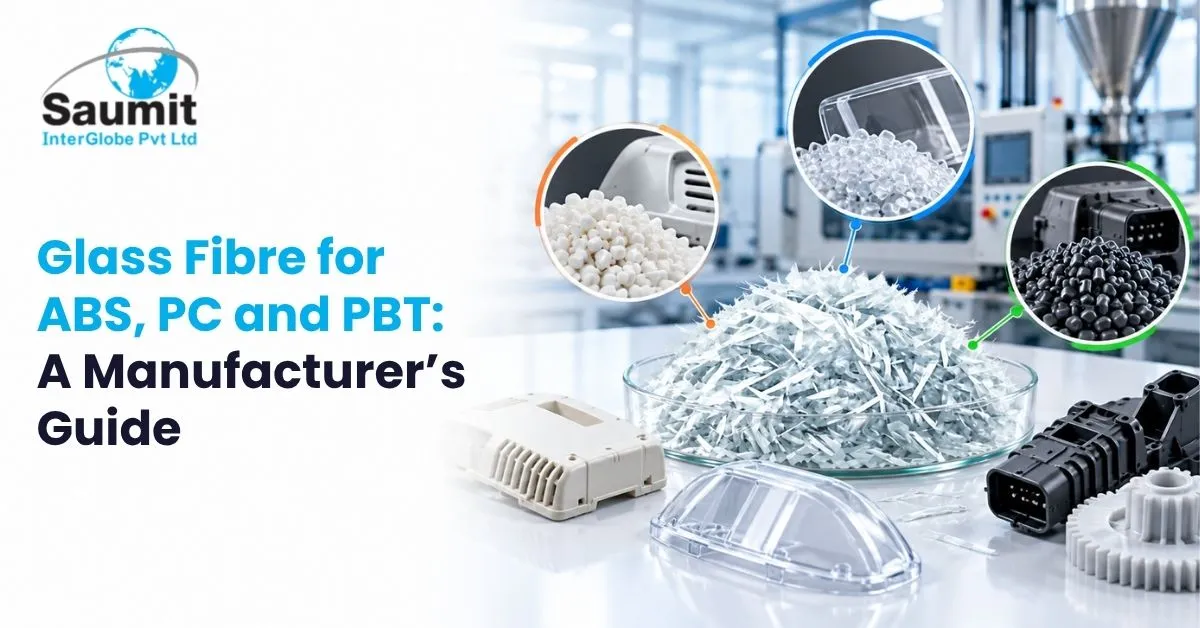
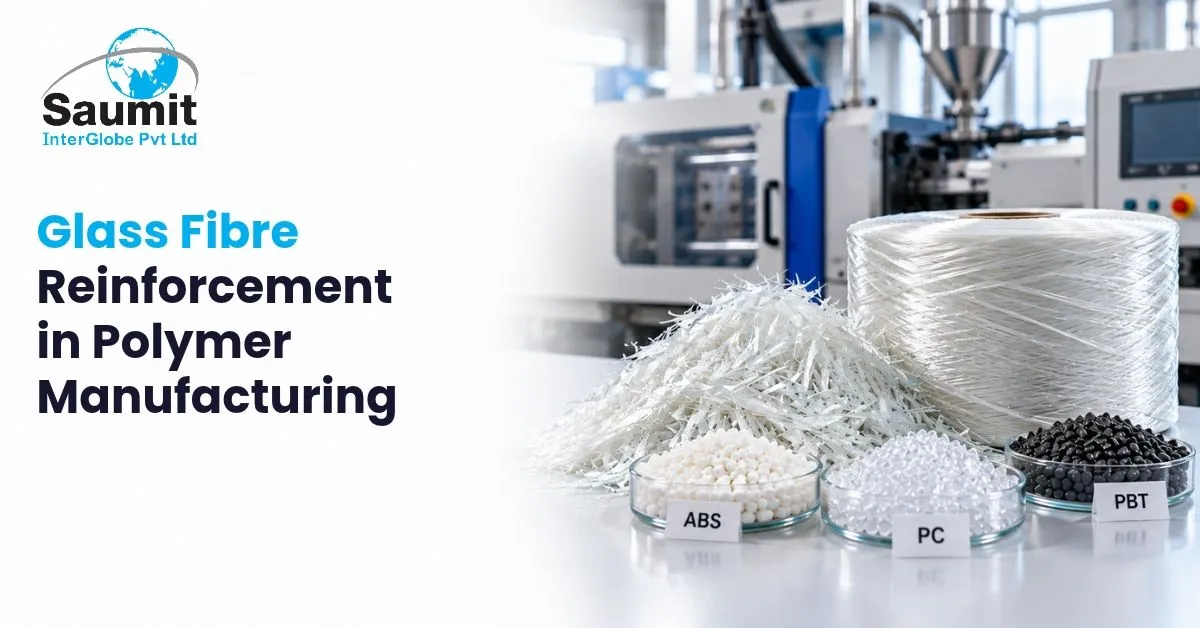
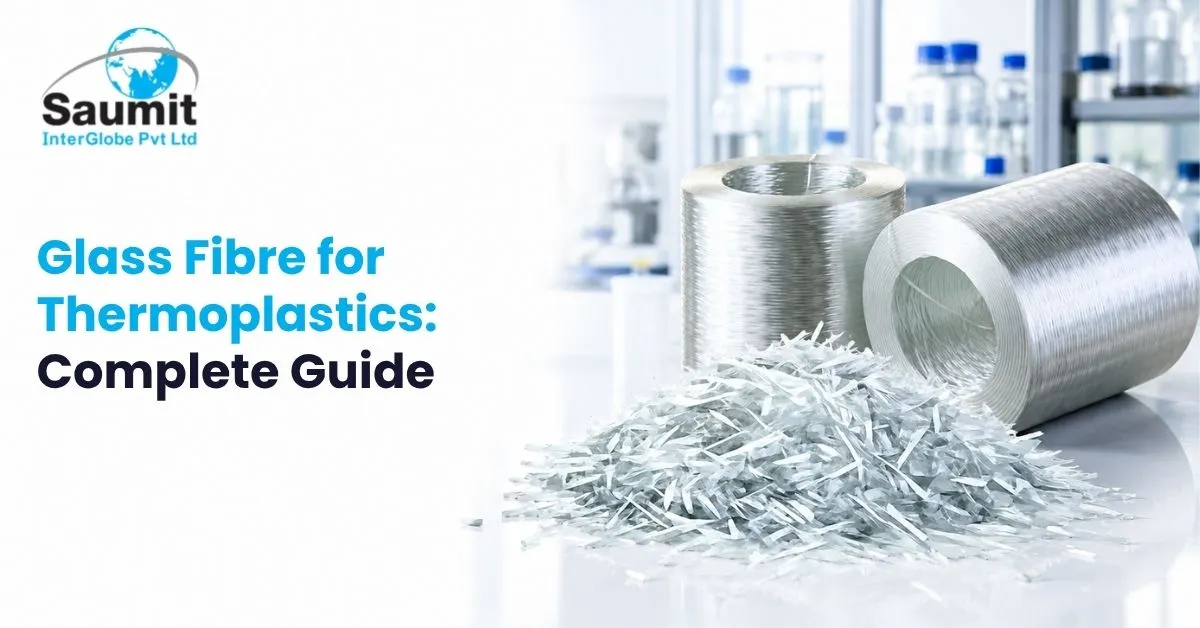
Selecting the right reinforcement material is essential for manufacturing engineering plastic components with the required strength, stiffness, dimensional stability, and durability. Acrylonitrile Butadiene Styrene (ABS), Polycarbonate (PC), and Polybutylene Terephthalate (PBT) offer different mechanical, thermal, and processing properties, making them suitable for various industrial applications.
Incorporating Glass Fibre into these polymers can improve their structural performance and expand their suitability for demanding applications. However, the results depend on resin compatibility, fibre content, processing conditions, and the component’s intended operating environment.
Why Use Glass Fibre in Engineering Plastics?
Glass fibre reinforcement helps engineering plastics withstand mechanical loads while maintaining their shape under suitable operating conditions. It can increase tensile strength, stiffness, and dimensional stability compared with unreinforced grades.
For manufacturers, selecting the right Glass Fibre grade also involves considering fibre sizing, dispersion, orientation, and compatibility with the polymer matrix. These factors influence the finished component’s performance, surface quality, and manufacturing consistency.
Glass Fibre for ABS, PC and PBT
Although these three polymers can benefit from reinforcement, each has different characteristics that influence material selection.
1. ABS (Acrylonitrile Butadiene Styrene)
ABS is commonly used in housings, enclosures, appliance components, and automotive parts because of its processability and impact resistance. Reinforcement with Glass Fibre can improve stiffness, strength, and dimensional stability, making suitable grades useful for more demanding structural applications.
However, higher reinforcement levels may affect impact performance, surface finish, and flow during moulding. Manufacturers should balance the required rigidity with toughness and appearance.
2. PC (Polycarbonate)
Polycarbonate is valued for its impact resistance, heat performance, and dimensional stability. Glass-fibre-reinforced PC grades can provide greater stiffness and strength for electrical housings, equipment components, and selected automotive applications.
When selecting Glass Fibre for PC, manufacturers should assess the balance between rigidity and impact resistance. Fibre orientation can also create directional differences in shrinkage and mechanical properties, potentially affecting component dimensions and warpage.
3. PBT (Polybutylene Terephthalate)
PBT is a semi-crystalline engineering thermoplastic used in electrical connectors, sensor housings, automotive components, and industrial parts. Glass fibre reinforcement can improve stiffness, strength, dimensional stability, and heat-related performance in suitable grades.
Material selection should account for crystallisation behaviour, mould shrinkage, moisture exposure, and operating temperature. For applications involving prolonged heat or moisture, the selected grade’s hydrolysis resistance and long-term performance should be verified.
Comparison of Reinforced ABS, PC and PBT
| Material |
Key reinforcement benefits |
Common applications |
| Glass-fibre-reinforced ABS |
Improved stiffness and dimensional stability |
Appliance housings, automotive parts |
| Glass-fibre-reinforced PC |
Greater rigidity and structural performance |
Electrical enclosures, equipment components |
| Glass-fibre-reinforced PBT |
Improved stiffness and dimensional stability |
Connectors, sensors, automotive components |
 +91 6358172453

 info@saumitgroup.com