+91 6358172453

 info@saumitgroup.com

Selecting the right reinforcement material is essential for manufacturing engineering plastic components with the required…
Frequently Asked Questions
It is the process of incorporating glass filaments into a polymer matrix to improve properties such as tensile strength, stiffness, and dimensional stability.
It is used to improve mechanical performance, reduce deformation, and help polymers meet the structural requirements of demanding applications.
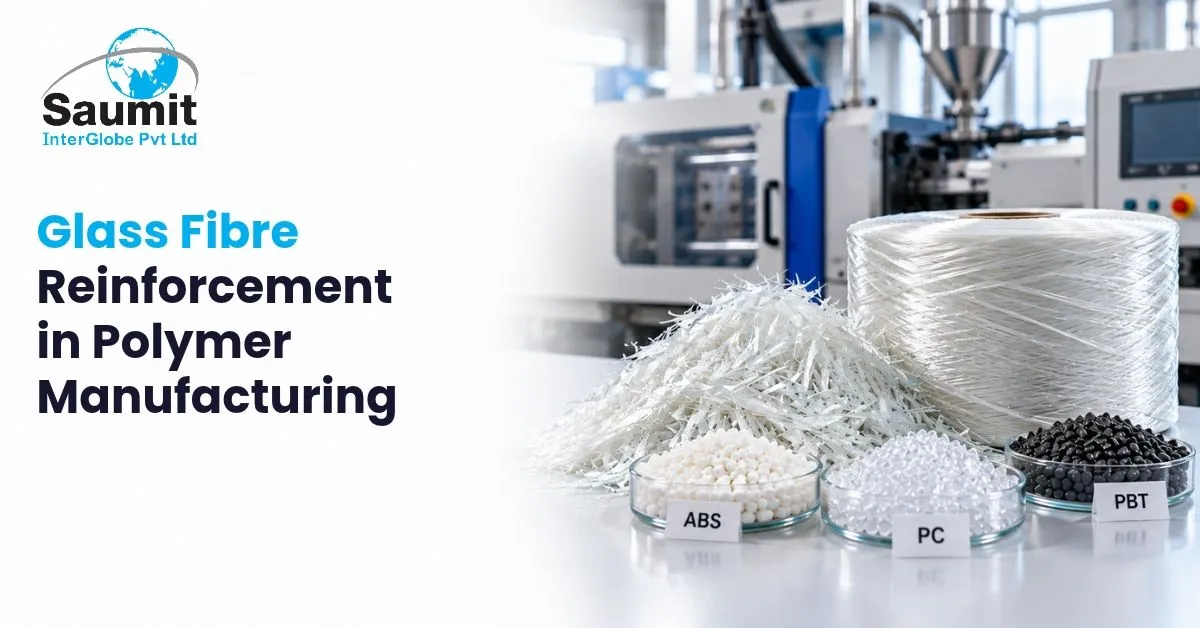
Common examples include ABS, polycarbonate (PC), polybutylene terephthalate (PBT), polypropylene (PP), polyamide (PA), and selected thermosetting resins.
Fibre content influences strength, stiffness, density, flow behaviour, surface finish, and processing characteristics. The appropriate level depends on the intended application.
Common methods include compounding, injection moulding, extrusion, and compression moulding, depending on the polymer and final component design.
Conclusion
Polymer reinforcement helps manufacturers develop components with improved mechanical properties and dimensional stability. Incorporating Glass Fibre into suitable polymer matrices can increase strength, stiffness, and durability across automotive, electrical, and industrial applications. Selecting compatible materials and controlling manufacturing conditions are essential for achieving consistent composite performance and meeting application requirements.
Related Posts