+91 6358172453

 info@saumitgroup.com

Recovering valuable metals from aqueous solutions requires careful control over chemical reactions, operating conditions, and…
Frequently Asked Questions
It is glass-fibre reinforcement incorporated into thermoplastic polymers to improve properties such as strength, stiffness, and dimensional stability. The final performance depends on the polymer, fibre content, and manufacturing process.
Common options include polypropylene, polyamide, PBT, and polycarbonate. The suitable polymer depends on mechanical requirements, operating temperature, chemical exposure, and processing conditions.
Glass fibre can improve stiffness retention and reduce deformation under heat. However, the maximum service temperature depends on the base polymer, formulation, component design, and operating environment.
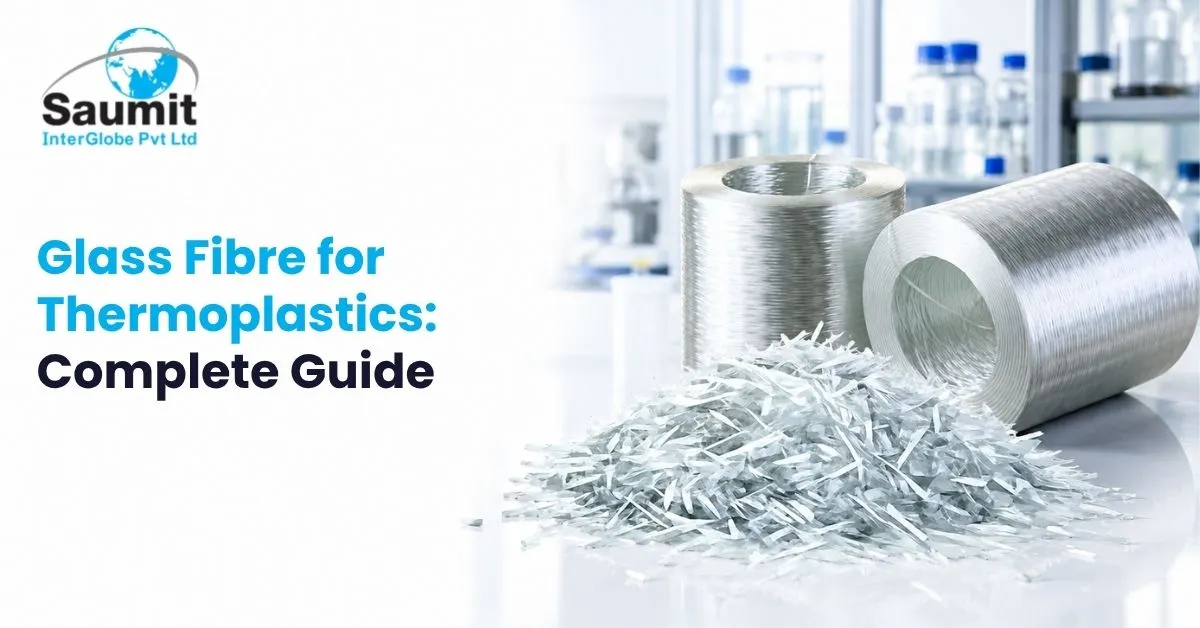
Chopped glass fibres are commonly used in reinforced pellets and conventional compounding. Long glass fibres can provide improved structural and impact performance in suitable formulations, depending on fibre retention and component design.
Potential limitations include increased density, reduced ductility, abrasive wear on processing equipment, and sensitivity to fibre orientation. The impact of these factors depends on the formulation and application.
Conclusion
Glass fibre reinforcement enables thermoplastics to deliver greater strength, stiffness, and dimensional stability in demanding applications. Glass Fibre for Thermoplastics is used in automotive, electrical, appliance, and industrial manufacturing, with performance depending on resin compatibility, fibre characteristics, and processing conditions. Evaluating these factors helps manufacturers choose materials that balance mechanical performance, processability, durability, and cost.
Related Posts