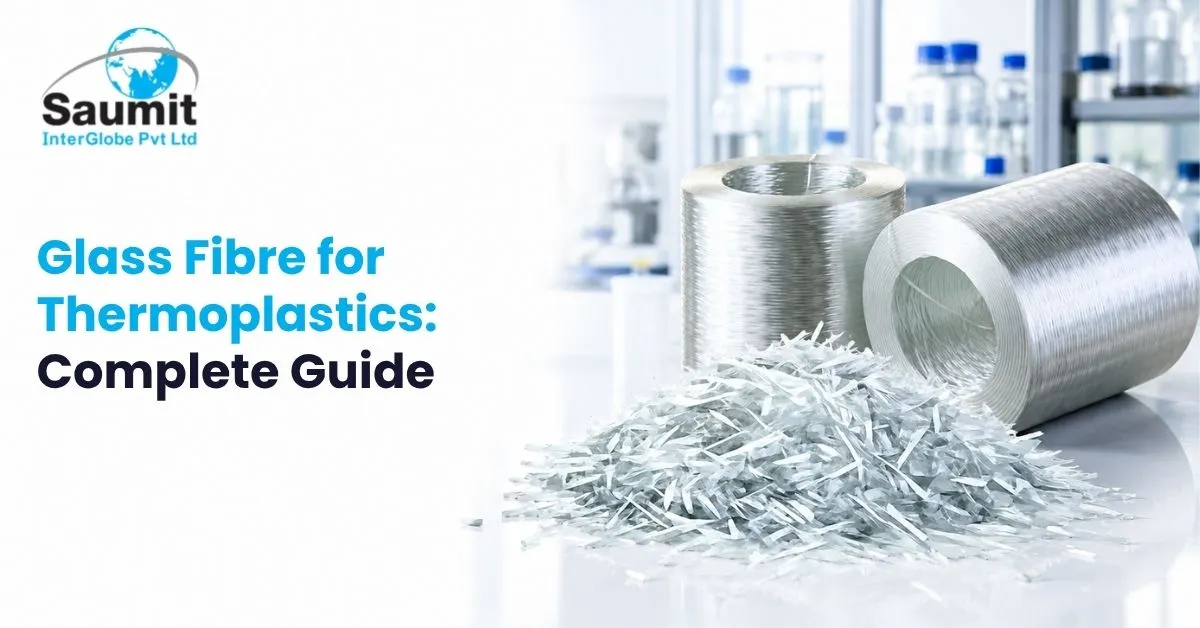
Fibre reinforced thermoplastics combine polymer resins with reinforcing fibres to improve stiffness, strength, and dimensional stability. Glass fibres are used in automotive components, electrical enclosures, appliances, and industrial products. Selecting Glass Fibre for Thermoplastics involves matching fibre sizing and content to the resin, then considering fibre length, orientation, and processing conditions. Compounding, injection moulding, and extrusion affect the reinforcement retained in the finished part. Reinforcement may also increase density, reduce ductility, or cause equipment wear. Testing helps manufacturers balance mechanical requirements, processability, and cost.
Thermoplastics are widely used in automotive, electrical, electronics, appliance, and industrial manufacturing because they are lightweight and easy to process. However, standard thermoplastics may lack the strength and stiffness required for demanding applications. Reinforcement helps overcome these limitations while preserving…
 +91 6358172453

 info@saumitgroup.com