Lithium-ion battery recycling helps recover valuable materials from spent batteries used in electric vehicles, electronics, and energy storage systems. Depending on battery chemistry, recoverable metals may include lithium, cobalt, nickel, and copper. Recycling typically involves safe collection, discharge where appropriate, dismantling, material separation, and chemical treatment. Solvent Extraction can support hydrometallurgical processing by selectively separating dissolved metals from leach solutions for further recovery. Extractant choice, pH, impurities, and feed composition influence separation performance. A properly designed process can improve resource utilisation and support the production of recovered materials for suitable downstream applications.
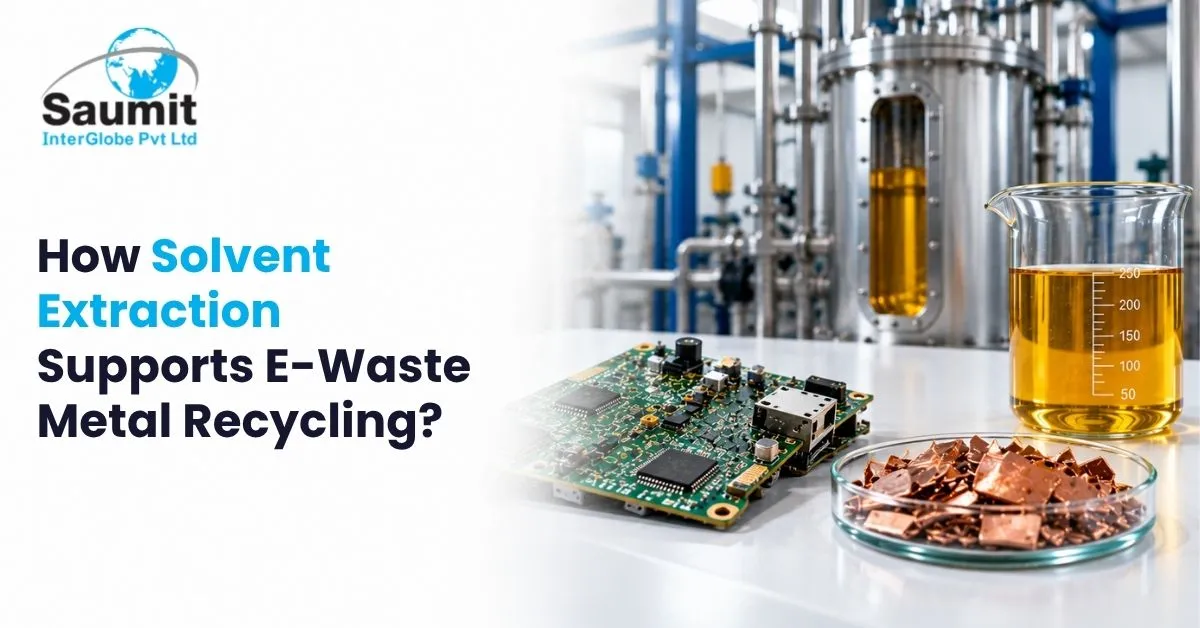
Electronic waste (e-waste) contains valuable metals that can be recovered and reused instead of being lost through disposal. Printed circuit boards, batteries, connectors, and electronic components may contain copper, nickel, cobalt, and other metals with industrial value. Recovering these materials…
 +91 6358172453

 info@saumitgroup.com